Before you paint / Decks & exterior wood
Will your deck stain soak in or sit on top?
Stain that soaks into the boards fades over time. Stain that dries on top can peel. The weather and the prep decide which one you get.
Painter Surplus · Featuring Home In Progress
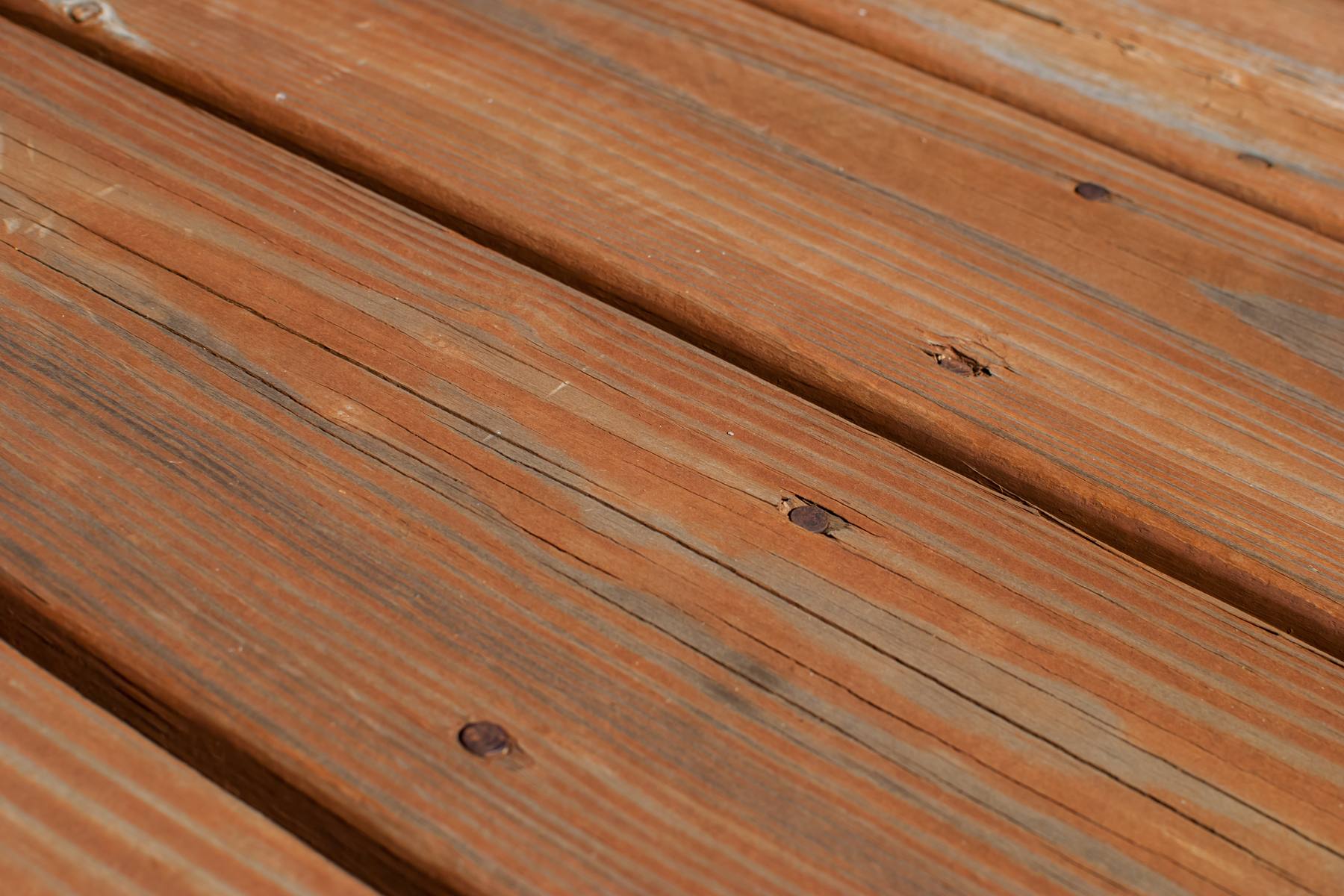
Stained Wood Deck Texture by Shadowmeld Photography / Wikimedia Commons · CC BY-SA 4.0 · Cropped.
From the podcast
Why do some deck stains peel?
Some stains soak in. Others sit on top.
Penetrating stains soak into the wood and leave little or no film on top. Most are translucent or semi-transparent, and some semi-solids work the same way. Solid stains form a film, much like paint.
The data sheet tells you which kind you have. Look for the film thickness. Cabot lists its Australian Timber Oil as minimal because the oil penetrates deeply into the wood. Its Solid Color Acrylic Stain + Sealer dries to a film three thousandths of an inch thick.
The difference shows up as the deck wears. A penetrating stain fades a little at a time. A film can crack, let water in underneath and peel. The USDA Forest Products Laboratory says damp wood under the film is one reason films are so hard to keep on decks.
Solid stain hides the grain, which can help on worn, blotchy boards. On cedar and redwood, Benjamin Moore calls for a primer under its solid stain. On a deck, plan to touch up peeling spots.
On solid stains for a deck, the podcast is direct:
“On decks in Michigan, solids peel.”
Home In Progress, episode 354 · 14:22
Stain on a cool, dry day.
Heat and direct sun dry stain on the surface before it can soak in. Stain that can’t soak in stays on top as a thin, shiny film, and that film can peel.
Benjamin Moore’s Woodluxe sheets say staining in direct sunlight keeps the stain from penetrating and causes lap marks. They list 40 to 90°F for the air and the surface. Cabot’s sheets rule out direct sun, hot surfaces, and any day when it is below 50°F or may drop below 50°F in the next 48 hours. They also call for 24 to 48 hours of drying after you clean the deck.
Work two or three boards at a time, end to end, and keep a wet edge. Follow the label on how many coats. With a penetrating stain, a sheen after it dries means too much went on and it formed a film. Solid stains are made to dry as a film, so that check doesn’t apply to them.
“You get lap marks, you get streaks.”
“It dries before it has a chance to penetrate deeply into the wood.”
Home In Progress, episode 459 · 44:45
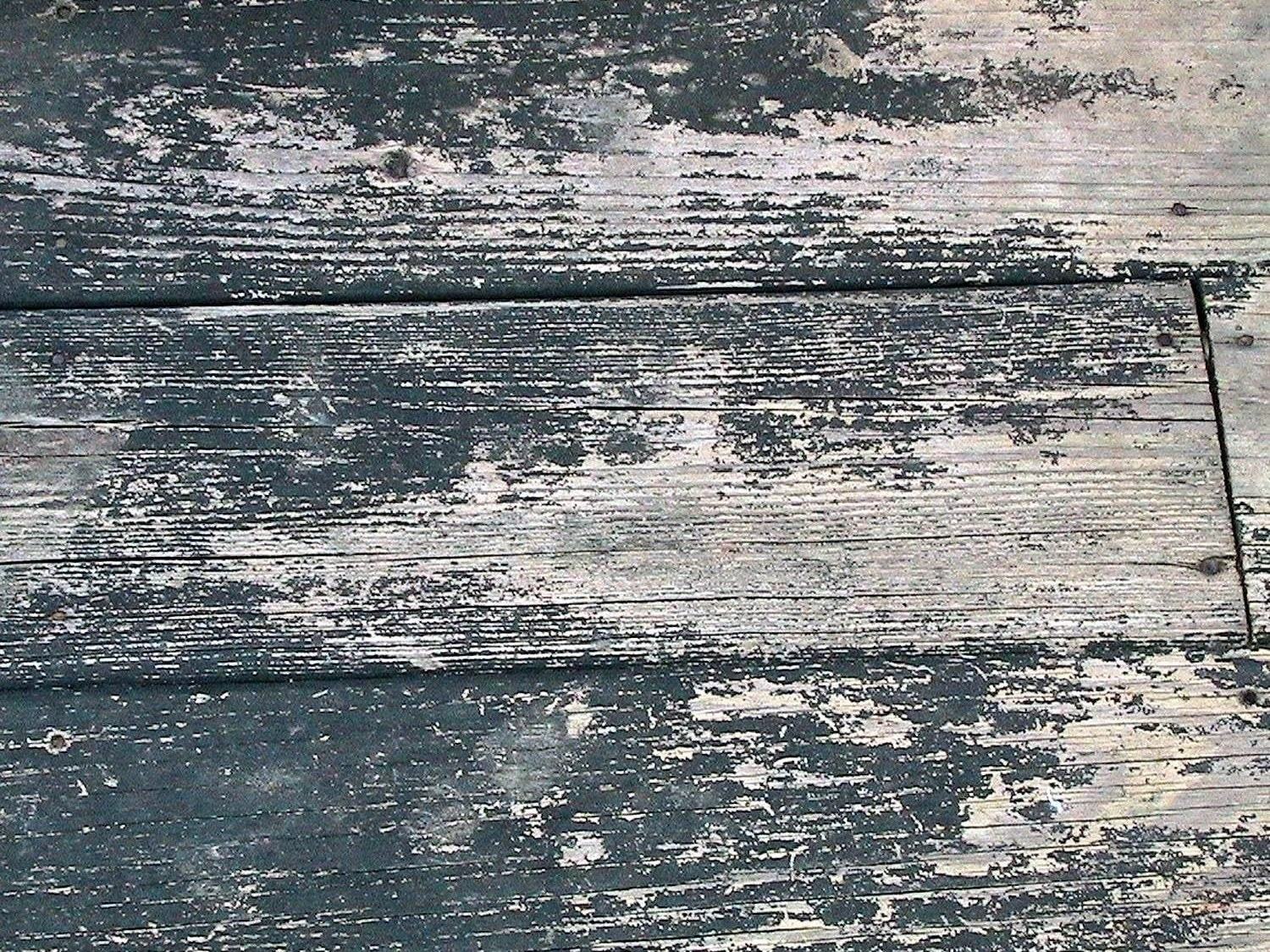
- 1A film on top. A coating that dried as a layer on the boards, not in them.
- 2Cracking and peeling. Films crack, let water in underneath and peel.
- 3Bare, gray wood. Weathered where the film let go. It needs prep before new stain.
“Don’t stain in the direct sunlight.”
Home In Progress, episode 354 · 29:22
Start from clean, sound, dry wood.
Dirt, mildew and gray, loose wood fibers have to come off before you stain. Benjamin Moore’s sheets call for a wood restorer on gray, weathered boards until the surface is sound. Cabot’s say sanding may be needed to get all the loose fibers off.
Then test the boards. Benjamin Moore’s sheets say to put a few drops of water on the dry wood. If the water doesn’t soak in quickly, prep again. A penetrating stain can’t soak through an old film either. Benjamin Moore says to remove solid or existing finishes that keep it out, and Cabot says not to put Australian Timber Oil over painted or sealed wood.
A penetrating stain makes the next round easier, because there’s no peeling film to strip. Check the deck each spring. The 2026 episode expects one to two years from a coating on a Michigan deck. Cabot’s sheets put its Wood Toned stain at one to two years on decks and Australian Timber Oil at one to three.
The podcast’s case for a stain that fades instead of peeling:
“You just clean the deck, let it dry, and recoat it.”
Home In Progress, episode 459 · 48:08
Bring this to the paint counter.
Find your next project in the shop.
Surplus changes. The right questions still help you shop.
Inspired by Home In Progress, episode 354, April 13, 2024, and Home In Progress, episode 459, May 16, 2026. The deck discussions run from 10:16 to 29:59 and from 41:25 to 49:25. Check current instructions for the stain you select.
Also drawn on: Benjamin Moore Woodluxe semi-transparent data sheet · Benjamin Moore Woodluxe solid data sheet · Cabot Australian Timber Oil data sheet · Cabot Wood Toned Stain data sheet · Cabot Solid Color Acrylic Stain data sheet · USDA Wood Handbook, chapter 16.