Before you paint / Basements & masonry
What’s the white powder on your basement walls?
It’s salt that water carried through the wall. Stop the water before you paint, or the paint can come off with it.
Painter Surplus · Featuring Home In Progress
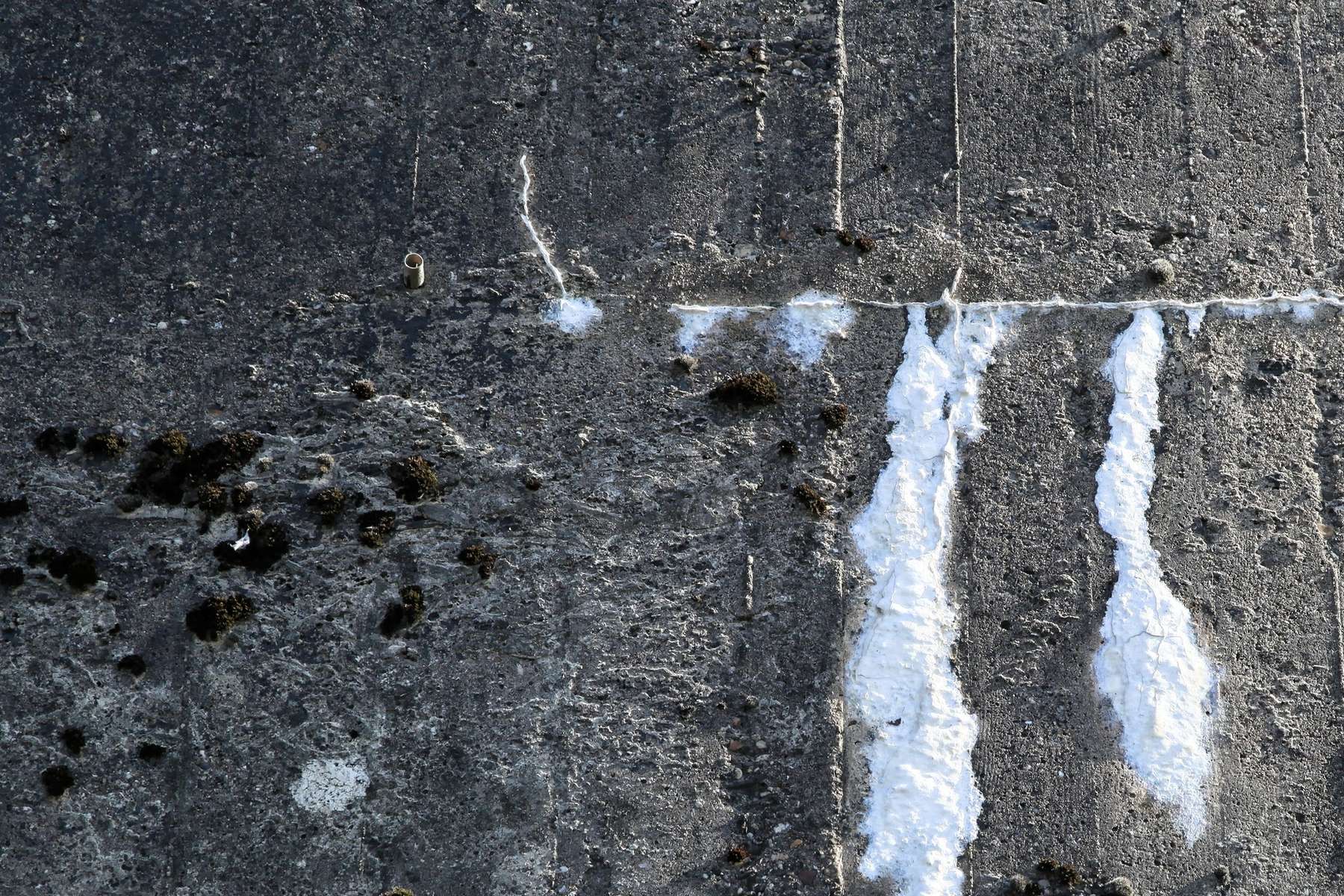
Lingen bunker wall by Frank Vincentz / Wikimedia Commons · CC BY-SA 3.0 · Cropped.
From the podcast
Why does white powder keep coming back on a basement wall?
It’s salt, and it means water is moving.
It can be a light dusting, white streaks, or fuzzy, crusty growth on block or poured concrete. It wipes off, then comes back. The episode explains it as efflorescence: salt deposits, not something growing.
The concrete masonry industry’s guidance says it takes three things: salts in the wall, water to dissolve them and carry them to the surface, and something to move that water, usually evaporation. Where the water dries, the salt stays behind.
Basement walls sit against soil, so they can soak up groundwater and the salts in it. Rain off the roof, clogged gutters, ground that slopes toward the house, cracks, and damp indoor air condensing in the wall can all feed it. The same guidance treats the salt as an appearance problem, not a structural one. What it tells you is that water is getting through.
The episode puts it in one line:
“The trigger for efflorescence is moisture.”
Home In Progress, episode 472 · 20:51
Painting over it doesn’t stop it.
Paint doesn’t stop the water moving through the wall. DRYLOK’s basement guide says that on concrete or masonry that isn’t waterproofed, recurring moisture and efflorescence can make paint crack, peel or bubble.
Paint makers write the same rule into their instructions. Sherwin-Williams says to delay painting while efflorescence keeps coming back. Benjamin Moore’s Fresh Start primer sheet calls for a surface that is clean, dry and free of water-soluble materials, and most efflorescence salts dissolve in water.
The episode’s host learned this on his own basement wall. He painted over the white powder the first time and ended up with peeling paint on top of the original problem:
“I just painted over it thinking that might do it and it did not do it.”
Home In Progress, episode 472 · 23:41
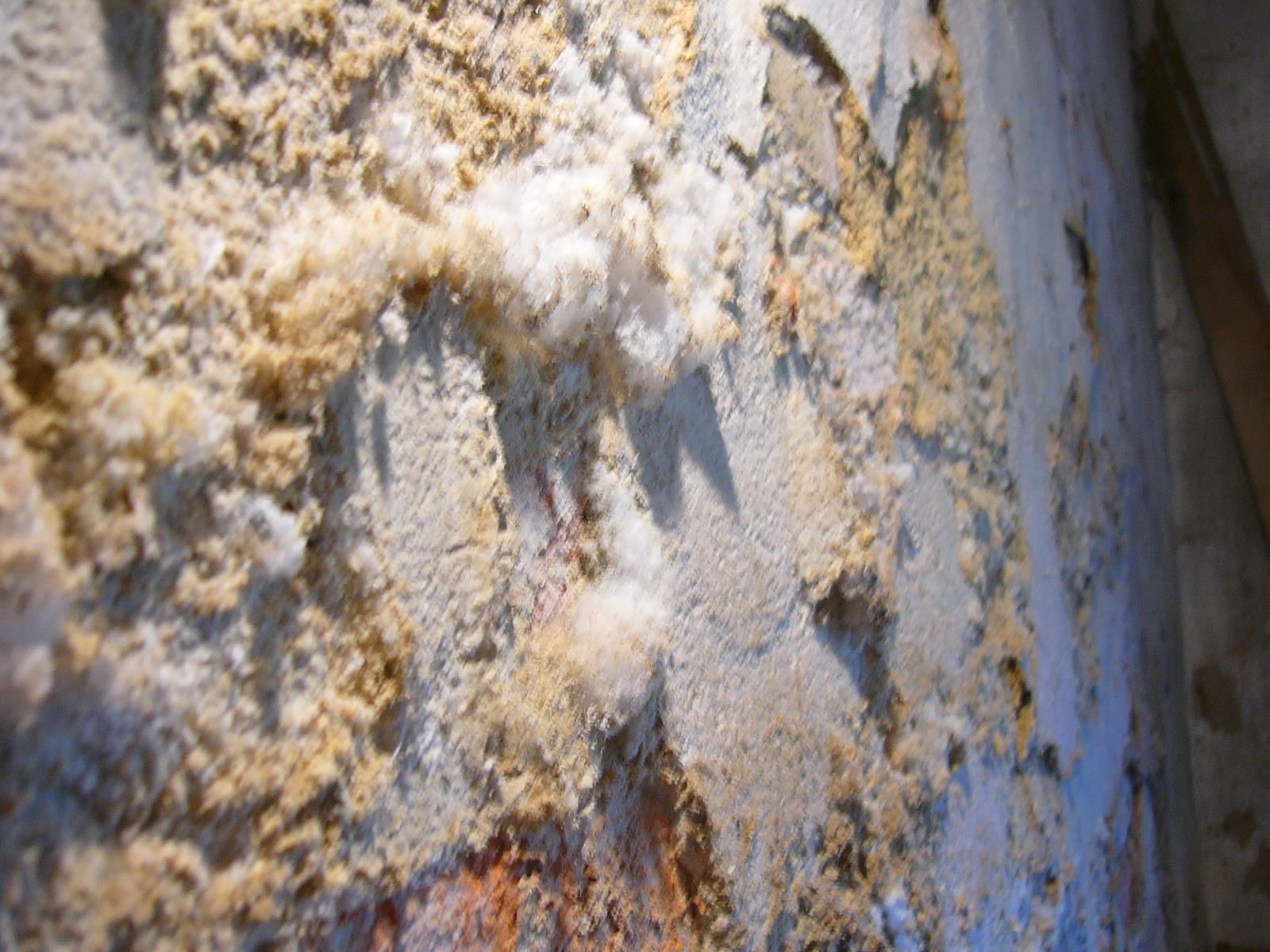
- 1Salt crystals. Water carried salt to the face and left it there as it dried.
- 2Coating flaking off. Where water and salt keep coming through, paint cracks and peels.
- 3Bare masonry. Where the coating let go.
Stop the water, then clean, dry and paint.
Fix the water first. The masonry guidance says to find the cause and repair it before removing the salt. A wall against soil can take in groundwater; streaks running down from a joint point to water getting in higher up. Start outside: clean out gutters and downspouts, and make sure the ground slopes away from the foundation. In the episode’s story, the house had no gutters, so rain poured off the roof at the foundation. Putting gutters up ended the efflorescence. Your wall may need a different fix.
Then brush the salt off dry with a stiff brush and rinse with clean water. Skip the pressure washer: water forced into the wall can feed more efflorescence. If you use a cleaner made for efflorescence, especially an acid one, follow its label exactly.
Let the wall dry, then run a hand over it. If white powder still comes off, it isn’t ready; Benjamin Moore says to remove any powder before priming. If the powder comes back, the water isn’t fixed yet.
On a dry, clean wall, use a primer whose data sheet lists masonry, such as Benjamin Moore’s Fresh Start, then the finish paint. Check that each product is allowed below grade; Benjamin Moore’s Ultra Spec block filler isn’t.
For bare block or concrete that has never been painted, the episode mentions INSL-X WaterBlock, a masonry waterproofer. Its sheet says to apply it directly to bare masonry that is clean and free of efflorescence, at 50 to 90°F. The episode says it holds back a certain level of moisture, and only on concrete that has never been painted.
“You can’t paint over it until the wall is completely dry.”
Home In Progress, episode 472 · 23:05
Bring this to the paint counter.
Find your next project in the shop.
Surplus changes. The right questions still help you shop.
Inspired by Home In Progress, episode 472, August 13, 2026. The efflorescence discussion runs from 18:41 to 24:47. Episode 360 covers an unpainted block wall from 25:01 to 30:20. Check the current data sheet and label for anything you put on the wall.
Also drawn on: Concrete Masonry & Hardscapes Association TEK 08-03A, pages 1 to 3 · DRYLOK basement guide · Sherwin-Williams on efflorescence · EPA guide to mold, moisture and your home · Benjamin Moore Fresh Start data sheet · Benjamin Moore Ultra Spec block filler data sheet · INSL-X WaterBlock data sheet.